
Air Adjustable Smart Bed - Sleep Study ResultsUpdated 4 months ago
7-Week Sleep Study
Do smart beds offer the best night's sleep?
The best way to answer this question is through science. Our air adjustable smart beds were put to the test to see if in fact they truly do help alleviate chronic low back pain.
Here Are The Scientific Results:
- 90.0% of sleepers reported a improvement of sleep and pain
- 88.9% of sleepers reported a reduction in back pain
- 85.2% of sleepers reported a better night's sleep
After the sleep study was complete we asked how willing the participants would be in purchasing one of these beds after the trial and we found that 81.5% of the participants want to buy an air adjustable smart bed.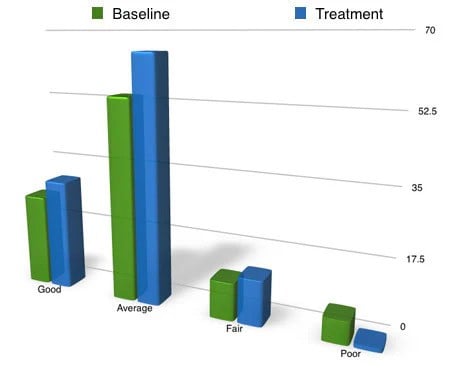
Overall sleep quality
An air adjustable firmness sleep system, aka smart bed, can improve perception of overall sleep quality, and pain levels.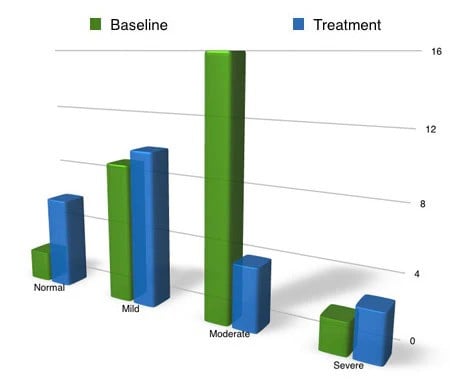
Overall pain reduction
Individuals with chronic low back pain should strongly consider a smart bed as an important aspect of the management of their pain.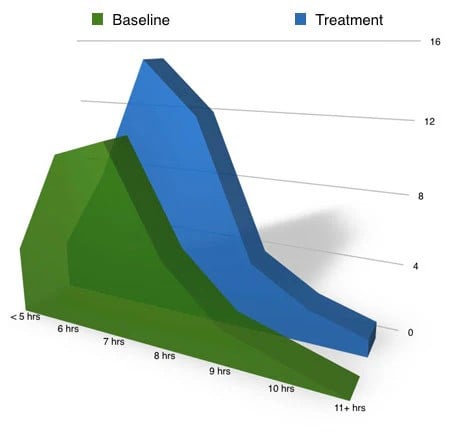
Overall sleep time
Individuals who slept on a smart bed saw an increase in their overall sleep time when compared to their baseline measurements.
Additional statistics
In qualitative measurement of Sleep Quality and Pain Experience, the trial population reported:
- 16% Decrease in time to fall asleep
- 24% Improvement of sleep fragmentation
- 38% Decrease of awakenings during sleep
- 38% Improvement in overall sleep depth
- 41% Improvement in perceived sleep quality
- 46% Improvement in level of morning pain
Scientific conclusions
Use of an adjustable firmness smart bed sleep system results in a reduction in morning pain experienced by the victims of chronic low back pain. More than just a numeric result detectable through statistics, 31% of study subjects reported an amount of pain relief that could be expected from the use of analgesics. Victims of chronic low back pain should consider an air adjustable firmness sleep system, as it offers a substantial possibility of significant pain relief.
Morning discomfort in the group with sleep adversely affected by chronic low back pain was also substantially reduced. Even pain prior to lights out, and by implication possibly during the day as well was notably reduced.
Physiological sleep measures, both by actigraphy as well as polysomnography, showed disturbances on the subject’s original mattress. Parameters showed trends in improvement, most notably sleep efficiency and especially arousals. The lack of statistically significant change may be a reflection of a variety of issues: unidentified elements unique to this study populations, pain levels, a greater length of time on the therapeutic mattress being needed before improvement could be measured, or that the measures themselves are not sensitive enough to measure the aspects of sleep responsible for the robust subjective changes. Pain shows substantial fluctuation across the night in most individuals. Low level pain may be significant enough to affect sleep depth and produce fatigue without necessarily producing striking alterations in the major features of sleep architecture.
The general outcomes measures, FOSQ and SF-36, both showed significant disturbances, and were improved by the bed system. Again, the lack statistically significant changes may be a reflection of the same issues described above.
The global measures are compatible with measured experimental improvements, supporting the beneficial effects of the adjustable firmness smart bed sleep system.
Overall, the data collected certainly supports the conclusion that individuals with chronic low back pain should strongly consider an air adjustable firmness smart sleep system as an important aspect of the management of their pain.
*Efficacy of Airbed Sleep System in Sleep Improvement in Chronic Low Back Pain. Study performed by Pacific Sleep Program c/o Gerald B Rich, MD, FABSM. Based on a seven-week study of 37 subjects, averaging 51.5 years of age with an average body mass index of 29.5.
Full Study Report and Results are available here: Pain and Sleep Study 1, Pain and Sleep Study 2
Study was conducted on Adjustable Firmness Mattresses marketed under the brand name Nautilus which was manufactured by American National Mfg beginning in 1989. In 2007, Nautilus decided to exit the mattress space and American National Mfg purchased all the inventory and IP along with the name Instant Comfort from Nautilus. The ANM products, and the Nautilus products all used adjustable firmness air controllers and air chambers to adjust firmness just as they do today.